[vc_row type=”in_container” full_screen_row_position=”middle” scene_position=”center” text_color=”dark” text_align=”left” top_padding=”30″ overlay_strength=”0.3″ shape_divider_position=”bottom”][vc_column column_padding=”no-extra-padding” column_padding_position=”all” background_color_opacity=”1″ background_hover_color_opacity=”1″ column_shadow=”none” column_border_radius=”none” width=”1/1″ tablet_text_alignment=”default” phone_text_alignment=”default” column_border_width=”none” column_border_style=”solid”][vc_column_text][nectar_dropcap color=”#3452ff”]A [/nectar_dropcap]t the last Systems Symposium organized at Johns Hopkins University, Guru Madhavan from the National Academies spoke about how engineers can influence policy and economics. In particular, he told the story about Penicillin, which I think has important lessons for us today.[/vc_column_text][/vc_column][/vc_row][vc_row type=”in_container” full_screen_row_position=”middle” scene_position=”center” text_color=”dark” text_align=”left” top_padding=”30″ overlay_strength=”0.3″ shape_divider_position=”bottom”][vc_column centered_text=”true” column_padding=”no-extra-padding” column_padding_position=”all” background_color_opacity=”1″ background_hover_color_opacity=”1″ column_shadow=”none” column_border_radius=”none” width=”1/1″ tablet_text_alignment=”default” phone_text_alignment=”default” column_border_width=”none” column_border_style=”solid”][image_with_animation image_url=”7076″ alignment=”” animation=”Fade In” img_link_large=”yes” border_radius=”none” box_shadow=”none” max_width=”100%”][vc_column_text]Alexander Fleming (Source: Wikimedia)[/vc_column_text][/vc_column][/vc_row][vc_row type=”in_container” full_screen_row_position=”middle” scene_position=”center” text_color=”dark” text_align=”left” top_padding=”30″ overlay_strength=”0.3″ shape_divider_position=”bottom”][vc_column column_padding=”no-extra-padding” column_padding_position=”all” background_color_opacity=”1″ background_hover_color_opacity=”1″ column_shadow=”none” column_border_radius=”none” width=”1/1″ tablet_text_alignment=”default” phone_text_alignment=”default” column_border_width=”none” column_border_style=”solid”][vc_column_text]Almost everyone knows that Alexander Fleming discovered Penicillin in 1928. He shared the Nobel Prize in 1945 with Howard Florey and Ernst Chain, two other researchers who looked at further development of the drug to be better used in the population. Penicillin had been discovered, the researchers had already received recognition, and for purposes of history, the story was over.

But we had no idea how to distribute or produce Penicillin for maximum impact. As late as 1942, half the Penicillin supply of the country was used up to treat one patient with sepsis. If research and development on Penicillin had stopped then, we would not have this cure available to us today.
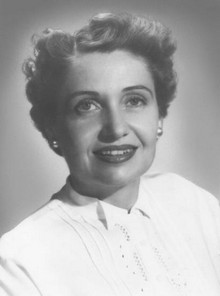
Thankfully, Margaret Hutchinson Rousseau used deep-tank fermentation for producing Penicillin,[/vc_column_text][/vc_column][/vc_row][vc_row type=”in_container” full_screen_row_position=”middle” scene_position=”center” text_color=”dark” text_align=”left” top_padding=”30″ overlay_strength=”0.3″ shape_divider_position=”bottom”][vc_column column_padding=”no-extra-padding” column_padding_position=”all” background_color_opacity=”1″ background_hover_color_opacity=”1″ column_shadow=”none” column_border_radius=”none” width=”1/1″ tablet_text_alignment=”default” phone_text_alignment=”default” column_border_width=”none” column_border_style=”solid”][vc_column_text]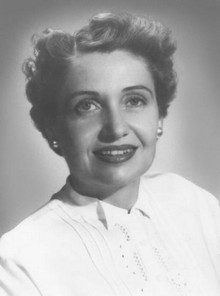
and we finally had a method that could implement the great discovery that happened over 15 years earlier. Her impact often gets a footnote, or at most a paragraph, in the history of Penicillin. But she arguably had as much of an impact as Fleming and the others on us having access to Penicillin today.
Penicillin offers us a variety of lessons. Our society has had a complicated history with antibiotics like Penicillin, with issues of misuse, resistance, and diversity. The Clinical Trials Transformation Initiative (CTTI), has a number of research areas open on how to encourage trials for antibiotics, even for specific conditions such as pneumonia.
Margaret Hutchinson Rousseau (Source: Wikimedia)
But this offers us an even more nuanced lesson. It took 17 years from the discovery of a new drug to the actual production and dissemination. This was before the days of a lengthy clinical trial system, yet it took a while before we even knew how to use the drug in a large population. It has also taken us even longer to realize what impact the spread of antibiotics will have on our population. We knew Penicillin would work wonders, and thanks to Margaret Hutchinson Rousseau it cured millions, yet it would have been great to go back to 1928 and let them all know about the issues of today.[/vc_column_text][vc_column_text]The time from 1950 to 1960 has been called the Golden Age of Antibiotic Discovery, almost half the drugs used today were discovered in that period. Time and time again, we have heard the current system promotes drug discovery. There is funding, incentives, momentum, and fame for discovering new drugs. This is truly one of the strengths of the system.
But what about implementation? For every dollar spent on research, we spend 99 cents on the discovery of new drugs. Conversations around prevention, public health, and personalized medicine all center around what impact cures have on the population and the individual. Let alone funding, there are no incentives or reasons for researchers to perform research on implementation. Again and again, we hear this in different ways. “How do we even know big data will work in the CT System.” – Curt Meinert. “We need more work on evidence generation for new drugs.” – Robert Califf. “The system needs to move towards research on implementation.” – Ayesha Kamal.
We are discovering new cures nonstop, and we are still in a crisis with the CT system. The problem isn’t discovering new drugs. The problem is we don’t know the questions we want to answer. That last sentence was roughly quoting Clay Christensen. And that is what we as a society should be focusing on. To complement the Golden Age of Discovery, we need to usher in a Golden Age of Implementation.
So how do we encourage more Margaret Hutchinson Rousseaus? She was a chemical engineer, looking to solve a medical problem. Engineering is designed to project and test the best way to bring inventions into society. Bringing in these lessons and methods from engineering offers us a great opportunity. Bayesian and machine learning, as opposed to frequentist and regression approaches. Integrated device and continuous monitoring. A culture shift towards making the patient the consumer, designing the product that will be ideal. It’s the Margaret Hutchinson Rousseau way. Dare I say it, if she was alive today, she would call herself a systems engineer.[/vc_column_text][/vc_column][/vc_row]